


By Maria Agnesa Puscasu, Cannes, May 2026
The day I watched Diary of a Chambermaid, Radu Jude’s new feature film, was my first day in Cannes. I arrived by train, surrounded by a most peculiar mix of people: working men and women, beggars, tourists, and tuxedowearing festivalgoers, all packed into the same wagon. It felt surreal, and I walked straight from that journey into the projection hall. Quite a night.
This potpourri from my train mirrors Jude’s film. He isn’t adapting Octave Mirbeau’s novel so much as using it as a pretext to look at many different kinds of people—as he always does—carrying them all in the same narrative, as if stuffing them into a wagon just to observe them.
I can only see the film from my Romanian point of view, and I kept wondering what other nationalities were making of it. Do they know how sad it is? Do they know how cruel it was to laugh when they did? Will they feel bad about the reasons they laughed during the screening? I know I did. It was one of the saddest films I’ve ever watched. And how come no one laughed when Nosferatu was on TV?
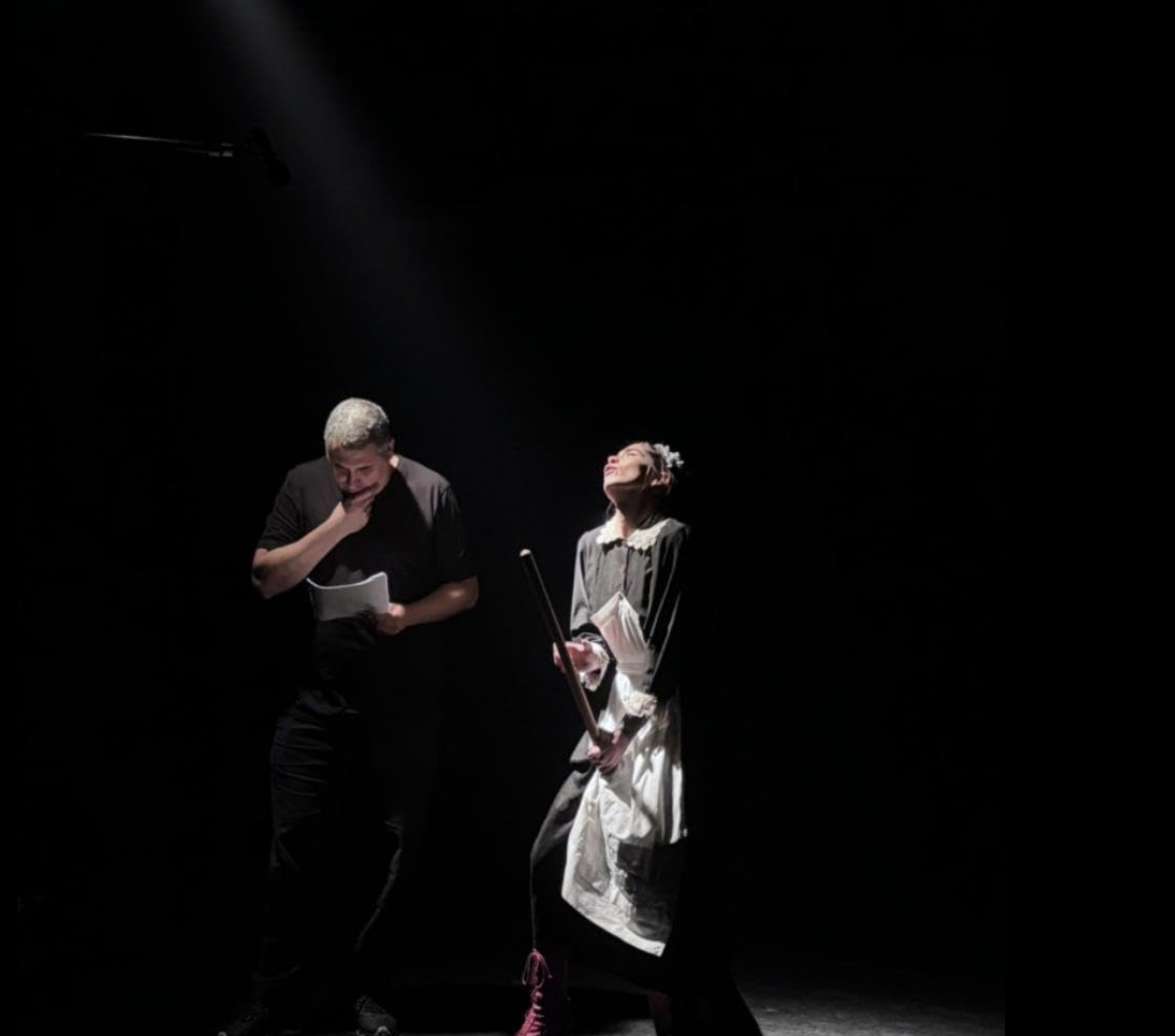
Gianina is a maid, nanny, and cook for a wealthy French family, while her mother looks after her daughter back in Romania. She is a country girl, but educated enough to speak good French and make witty remarks in dialogue with her employers. We see her reading Diary of a Chambermaid, and we see her acting in an amateur adaptation of the novel. Yet she and her daughter suffer deeply because of their separation.
One of the most striking shots in the film is a beautiful landscape framed by the window of a ruin. Should we look at the ugly frame or at the beauty beyond?
Gianina tells stories to the family’s son. One of them is Youth Without Old Age and Life Without Death, a wellknown Romanian tale. She and the emperor in the story share something: they both make promises they cannot keep to their children, just to make them stop crying.
What is Romania in this tale? I keep thinking about it. Are we the ones lied to by our forefathers just to keep quiet? And when we realise their promises don’t hold, we leave and make a living elsewhere. But what happens when we start to miss them?
A spoiled child taking what he thinks is his. A poor girl longing for her mother. A child leaving home. A child left at home.
Is it dangerous to miss someone or someplace? In the tale, longing brings death to the hero. It could do the same for the little girl, the daughter. Or perhaps it’s simply a reminder that we are not eternal, and that memory—because it is tied to time—is what binds us to death.
While constantly reminding her daughter that she will be home for Christmas, Gianina sends her videos of her surroundings and activities. Children refuse to feed on crumbs. They want the whole thing, no matter the price.
One of the student activists who follows the development of the play gets one of the actors deported when they try to help him. We live in parallel worlds, and nothing good seems to come out when they interfere.
Yes, the era of the café communists is gone, as Gianina’s boss reminds us, but now we are in the era of the couch philanthropist—solving the world’s problems as long as they don’t interfere with a ski holiday.
Gianina’s former employers took her papers and abused her. She managed to go to the police and free herself. Now she responds to new masters—people who treat her well in a beautiful household. They put her on the spot without physical violence. They convince her without restraint.
Is it about submissiveness? What will you do when your hands and feet are tied? You will be grateful for crumbs, and you won’t even know there could be bread on your table. What is valuable in this state of unconscious vulnerability? Perhaps the ability to tell stories without inserting yourself into them, without influencing the outcome. Blessed are the pure of heart.
Gianina reads the novel, she acts it, she lives it, and she speaks about it. But more than the novel, I find the film is really about the fairytale.
When the family’s boy gets scared by the tale, the mother insists that Gianina stop telling him such stories. The father, on the other hand, encourages her to continue, because they are the best stories. Could she make them just a little happier? Perhaps a happy ending, with no one dying. How do stories shape who we are? And what happens when we twist them to protect our children?
The ugly face of Romanian stories. If we change them, will they make us better? Like the people who would sacrifice a child for their ski trip? If we tell happy stories, will we have beautiful houses and go skiing while others do our chores? Will we be afraid of their stories?
In a hallucinatory dialogue between the French grandmother and Gianina, the grandmother confesses she was a fan of Ceaușescu before his fall. Only afterward, she says, did they learn what was really happening in Romania. Gianina admits she still thinks things were better back then. The grandmother accuses Romanians of forgetting the cold, the empty stores. Gianina lives in a beautiful home in France, yes, but her daughter is in a godforsaken village that doesn’t seem to have changed much in the last 35 years. Is this how we look—like we refuse to grow old, like the prince in our story? After spending our youth only enjoying ourselves, do we go looking for a father again?
The prince lives a carefree life for centuries, ignorant of the world. When he finally realises, it is too late.