


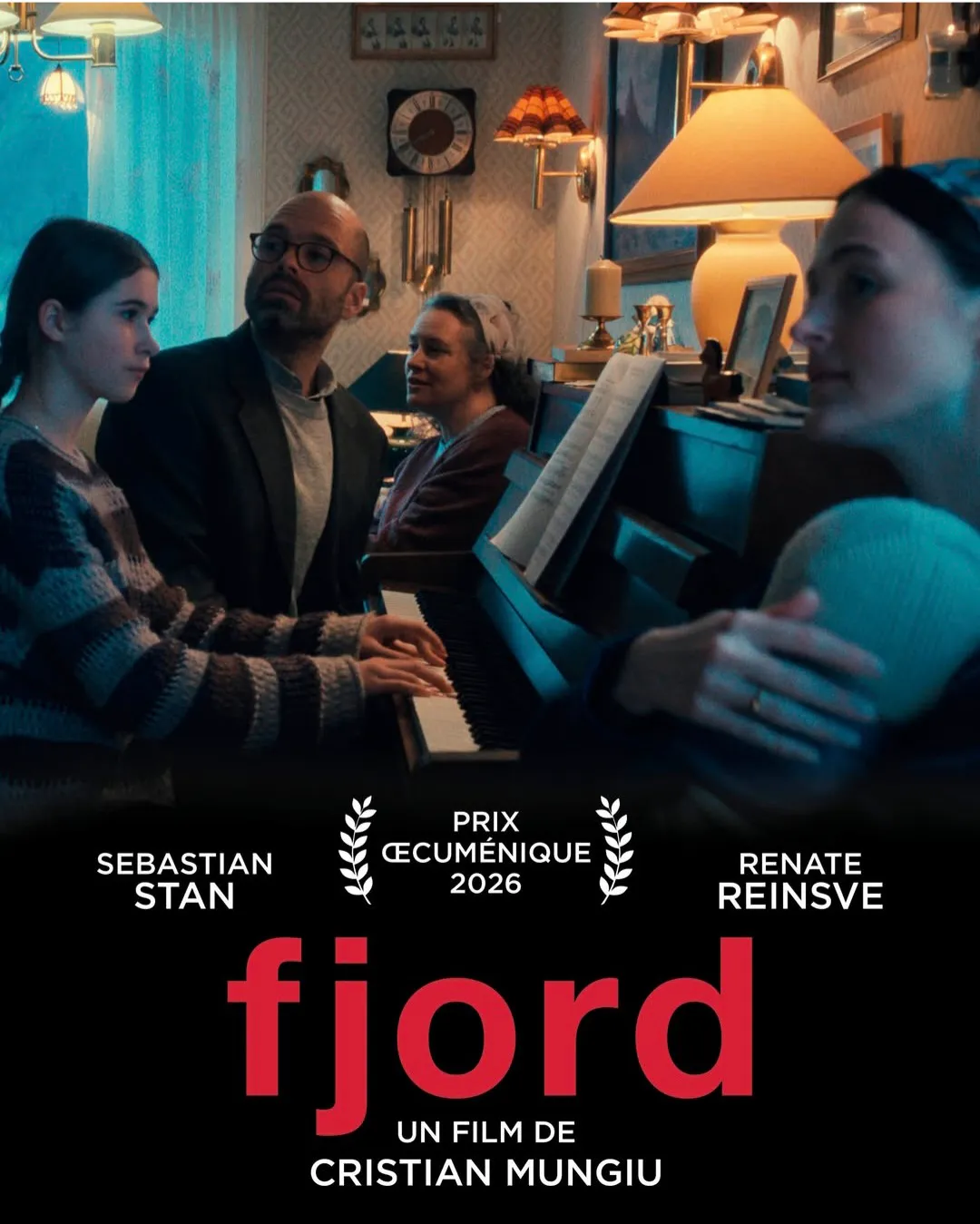
FJORD is a co-production between Romania, Norway, Sweden, Denmark, Finland, and France and is about evangelical parents who are suspected of child abuse. The Classification, yet to be determined, should be checked. Duration is 146 min.
The film is directed by Cristian Mungiu, and stars Sebastian Stan, Renate Reinsve, Ellen Dorrit Peterson, Lisa Carlehed, Lisa Loven Kongsli, and Henrikke Lund Olsen.
Review by Peter W Sheehan, Jesuit Media Australia
This is a dramatic thriller with bite that brilliantly exposes family disarray that can occur across different cultures. It takes its title from steep valleys that become inundated with water, that cause extreme currents. The film holds a mirror to different cultures in which everyone has an opinion about what others should do, and it challenges viewers with moral questions that are difficult to answer. In the film, Romanian husband, Mihai Gheorghiu (Sebastian Stan) and his Norwegian wife, Lisbet (Renate Reinsve) move to a remote Norwegian town from their home in Romania. They have five children and Lisbet is breast-feeding a new baby, and their family unit endorses particular evangelical beliefs. In their new town, bruises are noticed on their children, and Mihai admits to spanking his children to “protect them from harm”. Subsequently, authorities immediately come to take the children away to put them in foster homes for suspected abuse. The film won the prestigious Palme D’Or at the 2026 Cannes Film Festival, and received the 2026 prize of the festival’s Ecumenical Jury – both deservedly so.
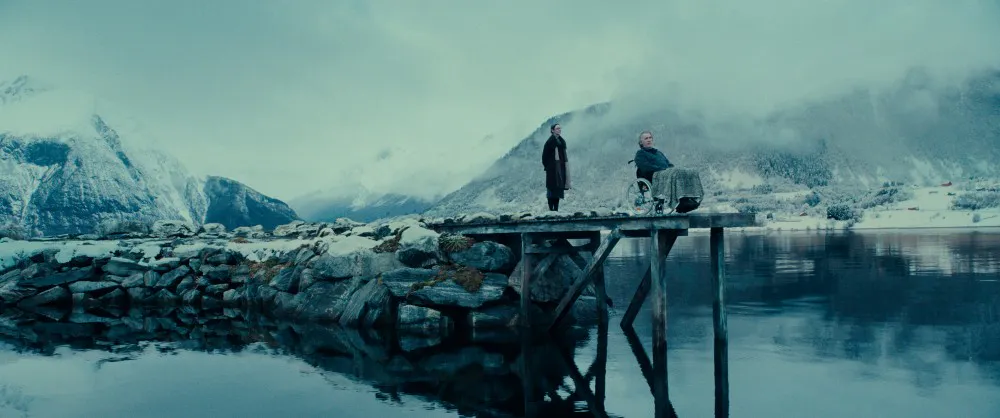
The film is a telling and gripping drama about family practices and rights. Mihai and his family have come from a culture that has endorsed a particular set of beliefs. The film asks to what extent “culture” is a determinant of acceptable behaviour, and how the Law needs to recognise the rights of people who have different cultural and religious beliefs. It further asks whether the Law is quicker to judge than to understand.The film does not provide a definitive answer to all its questions; rather, it explores possible answers to the issues it raises. Its weakness is that it leaves some of the major moral issues unresolved; its strength is that the film shows how much human behaviour can reflect conflicting values, and particularly so when different cultures are involved.
The film is exceptionally well-scripted, and very well acted by Renate Reinsve and Sebastian Stan. Their family would not have been torn apart if both religion and environment were aligned more closely. The film asks viewers whether cultural polarisation can undermine acceptance of people with different cultural beliefs. It argues convincingly that beliefs in one culture can be easily condemned by another, and when that occurs, conflicting values can be raised, that may seriously affect the judged legality of human behaviour. This is an exceptional film, which raises demanding social, cultural, and legal issues in a highly stimulating way.
Peter W. Sheehan