


By Father Hugo Tagle
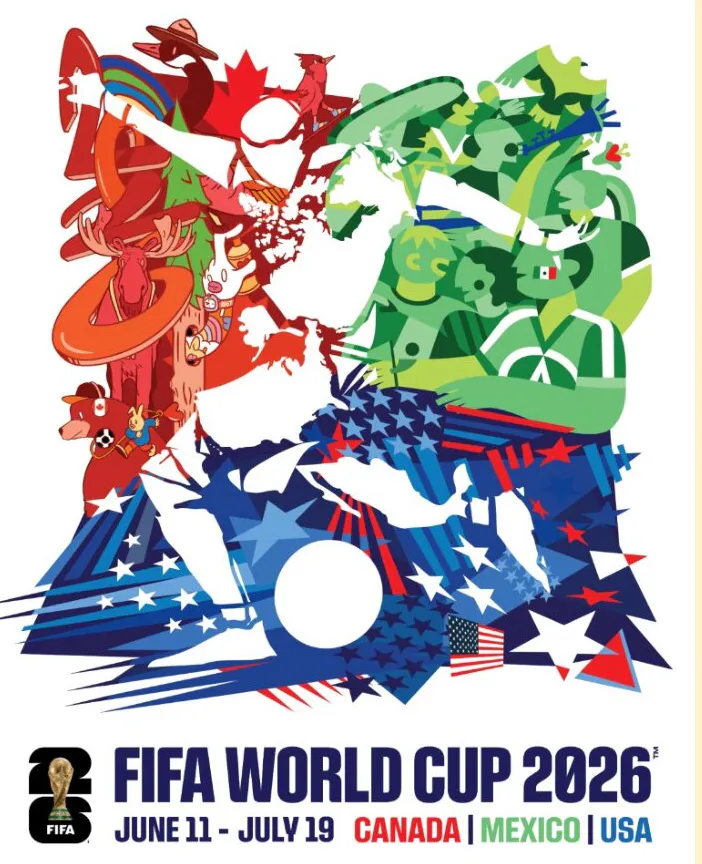
A whole month of pure soccer. Under the slogan “We Are 26,” the upcoming World Cup, hosted by the United States, Mexico, and Canada, will make history with staggering figures. The tournament expands from 32 to 48 teams, features 104 matches—compared with 64 in Qatar 2022—across 16 venues and lasts 39 days, ten more than the previous edition. FIFA estimates that nearly 6 billion people, two-thirds of humanity, will follow the championship. It is even predicted that, across televisions, computers, and phones, virtually every screen on the planet will connect to at least one of the 104 matches. The numbers are becoming unimaginable.
The massive scale of televised sports is not new. For years there have been channels dedicated exclusively to sports. Today the American football final, the Super Bowl, is followed with enthusiasm throughout Latin America—despite being played only in the United States—just as the Winter Olympics are watched in Caribbean countries and major tennis tournaments draw viewers in Africa and Asia.
But it is not all enthusiasm and applause. Many warn of the alienating effects of mass sports, which can become mere escapes from loneliness or promoters of superficiality. Yet there is no turning back. Soccer, in particular, has become a global phenomenon that keeps growing and touches almost every area of life. The most famous players, followed by millions, are walking industries because of the enormous money and influence they mobilize.
The line attributed to Saint John Paul II and to coach Jorge Valdano rings true: “Of all the unimportant things, soccer is the most important.” Indeed, among amusements, hobbies, and crowd sports, soccer is a very serious and important game.
Pope Francis has urged people repeatedly to return to the sport’s roots: its social, amateur, and community dimensions. He called soccer “the most beautiful sport in the world,” a school of life, a conveyor of values, and a promoter of peace. He encouraged athletes not to lose “the love for the game,” to give their best with joy, and to cultivate genuine friendships. Francis was also a passionate fan of the Argentine club San Lorenzo, of which he had been a member since childhood.
Pope Leo XIV, likewise an enthusiastic sportsman, has shown a love for tennis, baseball, and soccer. He follows the Peruvian club Alianza Lima and the Chicago White Sox. In his message to athletes at the Milan 2026 Olympics, he reminded them that “no one wins alone, highlighting the importance of coaches, families, and communities in every athlete’s success.
Taking advantage of major events, he has promoted an “Olympic truce.” It would not be surprising if he issued a similar appeal during this World Cup, calling for a pause in the armed conflicts that continue to plague the world.
Soccer is a valuable tool for social integration: it has rescued children and young people from marginalization and addiction and has served as a bridge between cultures, peoples, and religions.
Saint Paul repeatedly uses the image of the athlete to encourage growth in faith: “Do you not know that in a race all the runners run, but only one gets the prize? Run in such a way as to get the prize!” (1 Cor 9:24). The apostle speaks of discipline and self-control, admiring the effort of those who deny themselves many things to win a crown that will not last. In the same way, Christians are called to live their spiritual journey with perseverance and depth. Sport can become a true school of sociability, civility, and human development.
When Diego Maradona died, Pelé wrote on X: “We wil keep playing soccer in heaven”. And if any sport exists up there, it is surely soccer.
Father Hugo Tagle is a Catholic priest and a member of the Schoenstatt Fathers. He holds a Licentiate degree in Theology and a Doctorate in Communications and Literature. He is currently serving in Miami, Florida, USA, where he is involved in parish ministry and in Radio Paz of the Archdiocese of Miami.
Instagram: @HugoTagle
X (Twitter): @HugoTagle