


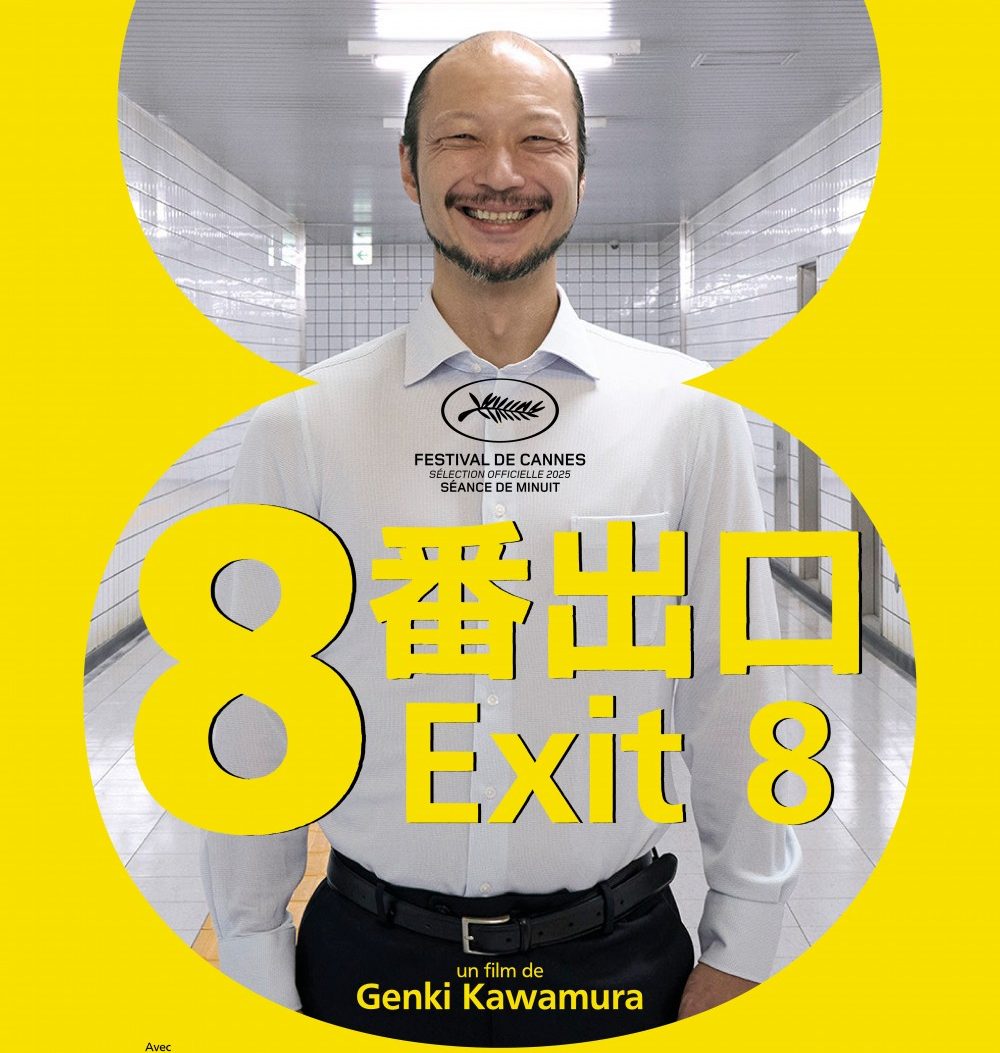
This Japanese horror film shows a man trapped in a subway station, who is desperate to get out.
EXIT 8. Starring Kazyunari Ninomiya, Yamato Kochi, and Naru Asanuma. Directed by Genki Kawamura. Rated PG-13 (some bloody images and terror). 95 min.
Review by Peter W Sheehan, Jesuit Media Australia
A man (Kazunari Ninomiya) finds himself lost on a packed Tokyo subway train in Japan. An incident occurs in his carriage when a homeless man yells in frustration at a woman carrying a crying baby. She is harassed by the man. A nameless man in the same carriage, called “The Lost Man”, views the distress of the baby’s mother and child, and is upset. Aware of the incident, but wanting to escape it, The Lost Man gets off the train, and finds himself trapped in a subway of mazes, full of interconnected corridors which block escape. He is is lost in an environment that has no coherent information that tells him exactly where he is, and what to do.
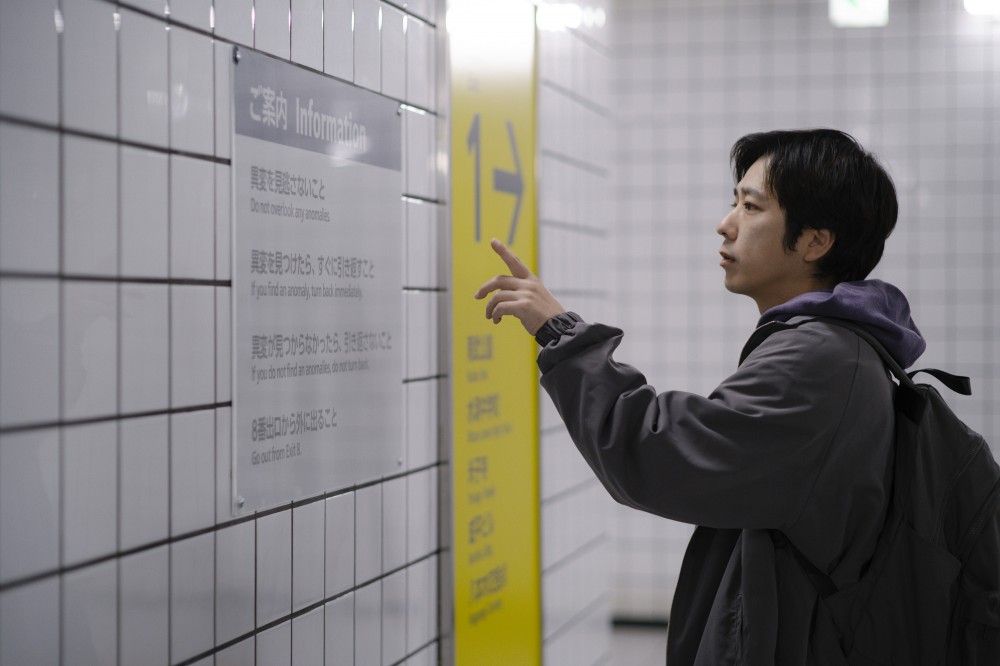
The film explores The Lost Man’s dilemma in a surreal way. Every attempt by him to escape looks more urgent than another. The film is visually remarkable. Its cinematography reinforces the logic of “impossible endeavour”; and it constantly repeats scenes with different framings to reinforce feelings of confusion. Each scenario reinforces the dilemma that there is no real exit, and choice of any route arouses anxiety. Passages in the subway are endless. If Lost Man leaves from Exit 8, he will find himself back at the beginning, and when he thinks he has found Exit 8, he learns that he is back at Level 0. He cannot pass through Exit 8 while so-called “anomalies” exist, and “Man” is one of them. The film is full of sequences that stress human inability to escape forced choices.
This is a film that brilliantly emphasises the dilemma of being both an observer and a participant in trauma at the same time. It asks the viewer to choose between getting involved, and ignoring trauma situations to avoid confrontation. Its dialogue is sparse, and communication is mostly through physical reaction. Music in the background escalates strong unease – the film starts and ends powerfully with the 1928 composition, “Bolero”, by French Composer, Maurice Ravel.
This is a film directed to fill viewers with dread. The repetition of scenes becomes a metaphor for modern existence, and the metaphor works astoundingly well. The corridors for possible escape in this maze are infinite, and humans live in a world where right choices are hidden from them.
This is a horror movie that intersects cleverly with human dread. It has been released both as a film and as a video game (with almost the same title). The film version, reviewed here, is an excellent horror movie, with strong visual appeal. The movie is under the excellent direction of Genki Kawamura who manipulates psychological tension in a creative, and highly intelligent way.
Peter W Sheehan, an Associate of Jesuit Media