


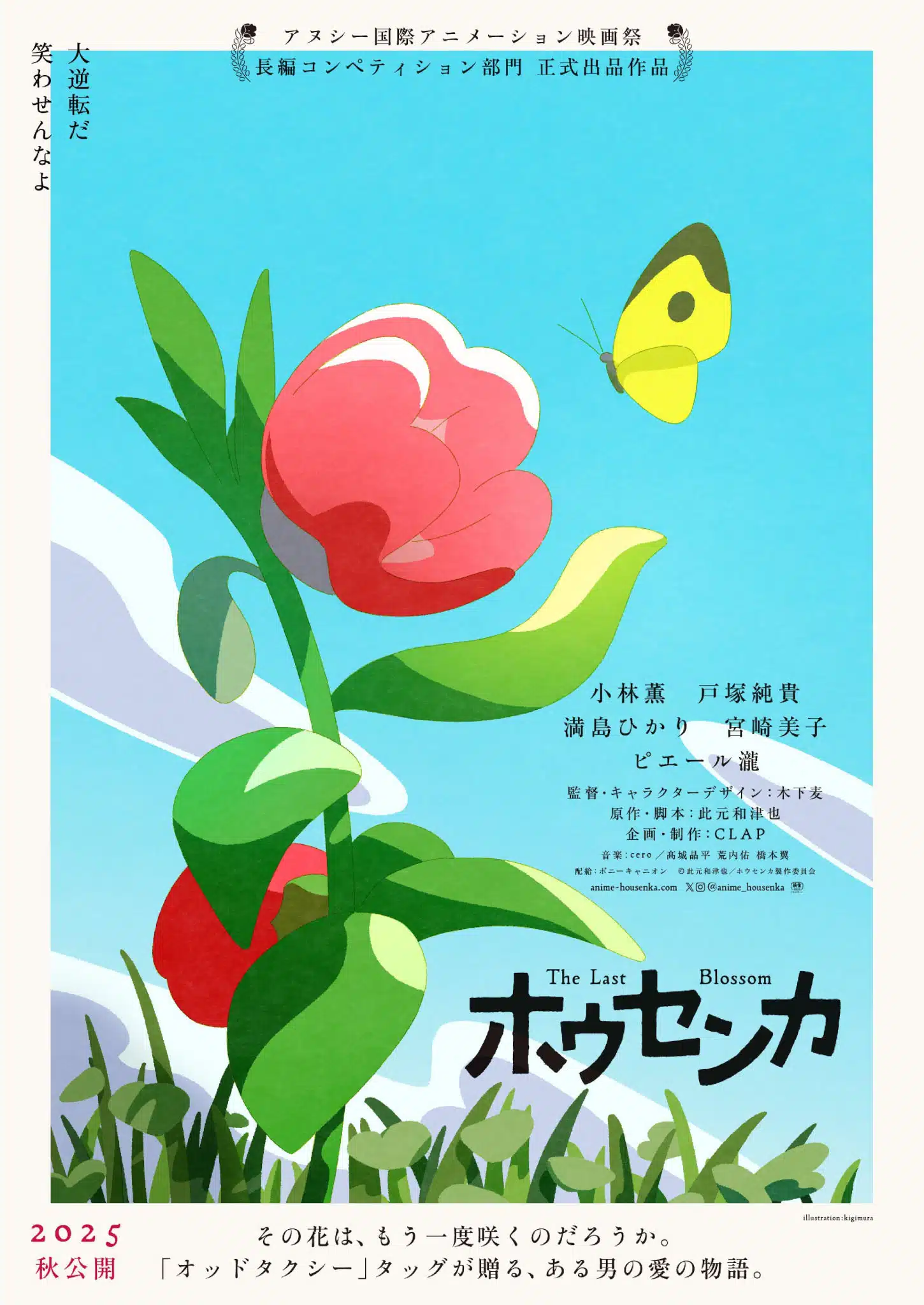
This is a Japanese animated film about a dying prisoner contemplating his life. He shares his recollections, while in prison, with a talking flower.
THE LAST BLOSSOM. Starring (by voice): Kaoru Kobayashi, Natsuki Hanae, Junki Tozuka, Hikari Mitsushima, and Pierre Taki. Directed by Baku Kinoshita. Rated PG (milld themes, animated violence and coarse language). 90 min.
Review by Peter W Sheehan, Jesuit Media Australia
A dying prisoner reflects on life in moments of prison life life in 1986. He has lived with a woman and her son while surrounded by Japanese Housenka flowers. As death approaches him in prison, one of the flowers, The Last Blossom, talks with him to help him articulate what he recalls. The flower becomes integral to the plot as it unfolds.

This is a highly unusual, contemplative tale of a talking Balsam flower in dialogue with an elderlyYakuza by the name of Minoru Akatsu (voiced by Kaoru Kobayashi). Akatsu’s life is one of violence mixed with kindness. Akatsu talks to the flower, and the flower (voiced by Pierre Taki) talks back to him. Akatsu and The Blossom Flower communicate with each other. This is a film that explores human conscience in life, and its morality, by mixing violence, betrayal, vengeance, love, and kindness. It is one that expresses the codes of Yakuza Brotherhood, which are rooted in strict feudal hierarchy that emphasises loyalty, chivalry, and secrecy.
In his life, Nana (voiced by Hikari Mitsushima) and her son, Kensuke, are given solace by Akatsu. Akatsu loves Nana deeply, and when Nana’s son (who is not his own) is diagnosed with a life-threatening heart condition, Akutsu turns to criminality to save him, which results in imprisonment.
“The Last Blossom” questions conventional notions of justice, and the difficulty in assessing one’s good and bad deeds at one and the same time. Akatsu has spend much of his life looking after a single mother and her infant son and this has provided peace in their lives. To afford a donor Akatsu plots with his brother to arrange a transplant donor to save Nana’s son’s life.
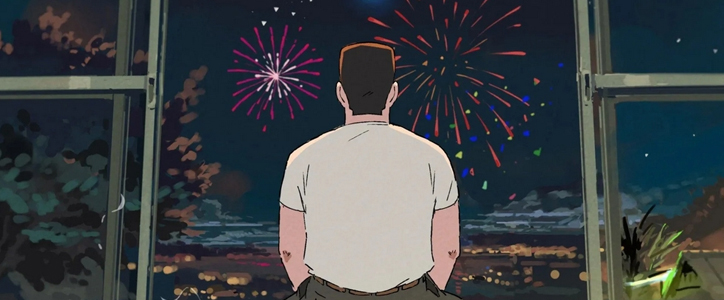
This a beautiful, sad film about the main character of Akatsu, whose kindness has saved a life, and his love of Nana is tragically unrealised. The animation behind the film is subtle. The film itself is an ode to family togetherness, seen through the eyes of Akatsu. Nana, and the flower. Under the astute direction of Baku Kinoshita, the film adopts a very unusual framing device in the way it communicates human understanding creatively on film. The cleverness of this film is that the animation is completely integral to revealing the plotline as it unfolds, bringing the film to a satisfying, and surprising ending.
Peter Sheehan, an Associate of Jesuit Media