



This British-American romantic drama film is loosely inspired by Emily Bronte’s 1847 novel, “Wuthering Heights”.
WUTHERING HEIGHTS. Starring: Margot Robbie, Jacob Elordi, and Martin Clunes. Directed by Emerald Fennell. Rated M. (Mature themes, sex scenes, and coarse language). 136 min.
Review by Peter W Sheehan, Jesuit Media Australia
In the movie, Margot Robbie plays a wild Catherine Earnshaw and Jacob Elordi plays an orphaned Heathcliff in a film adaptation of Bronte’s famous novel about two star-crossed lovers. Director, Emerald Fennell has cast Jacob Elordi, a white actor, as the racially ambiguous Heathcliff. Elordi is an Australian actor, who played the Creature in Guillermo Del Toro’s excellent FRANKENSTEIN, and was nominated for an Academy Oscar in that role. Filiming took place in the United Kingdom.
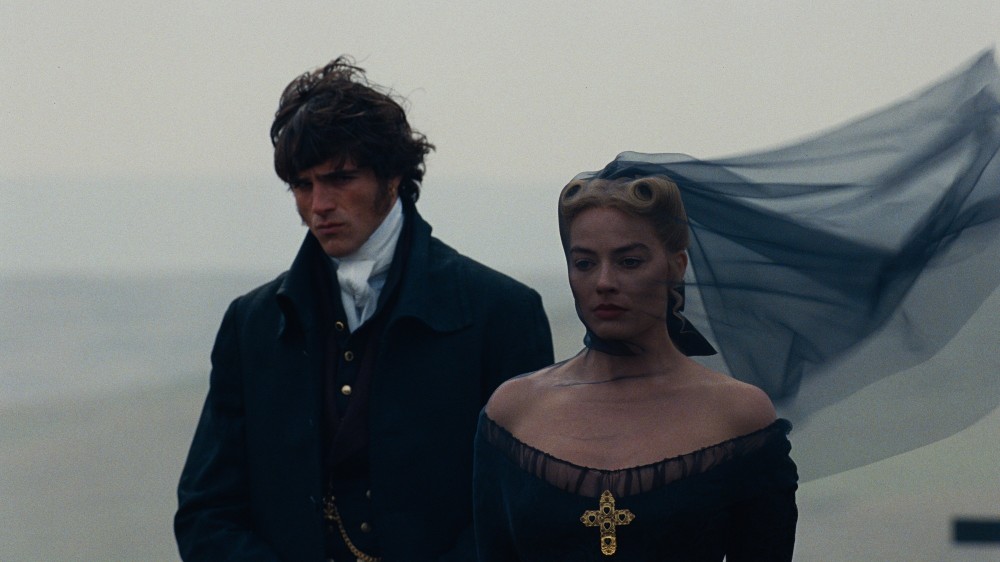
“Wuthering Heights” by Emily Bronte is a timeless classic that has seen multiple adaptations. This adaptation departs from Bronte’s source material in several respects. In this version, Catherine Earnshaw is suitably wild but older than the woman in Bronte’s novel, Elordi is half Spanish; and the film version is explicit without earning more than an M rating. In the opening scene, a man is publicly hanged, and his corpse (with sexual arousal made obvious) is under the interested gaze of a watching nun. The shock value of this, and other scenes, departs from previous adaptations of Bronte’s work. The intense and destructive relationship between Heathcliff and Catherine Earnshaw is evident in increasing sexual intensity as the movie proceeds.
Period drama is communicated in an especially confronting way when Heathcliff abuses his own son and Cathy’s daughter. The film portrays “Victorian-style” romantic intensity by highlighting love and passion in a way that puts most forms of puritanical relevance on hold. Class differences are present, but not made explicit, and Margot Robbie offers a very modern interpretation of Catherine Earnshaw which disappoints.
This is a movie that communicates little warmth, and it departs from Emily Bronte’s 1847 novel by embellishing the source material idiosyncratically. Martin Clunes is excellent as Catherine’s father, and Emerald Fennell pointedly uses “shock” to impress, which is a strategy not all viewers will endorse.
Peter W Sheehan, an Associate of Jesuit Media