


There is a precise, almost imperceptible moment when we stop looking at the world as though it belonged only to us. Cultural diversity lives in the countless ways human beings have invented to love, to cook, to mourn our dead, and to celebrate the fact that we are still alive.
For decades, we were told that progress meant becoming the same. Totalitarian propaganda filled our minds and bodies with words repeated to the point of exhaustion. But uniformity carries a cost that is seldom advertised: it impoverishes both individuals and communities. What truly shakes us, what transforms us, are differences — those small disagreements that force us to reconsider what we believed was already settled.
Our bodies are vessels still under construction, the very instruments with which we embrace life and one another. Shaped from childhood, they move through a world governed by power, by hymns that do not engage the full complexity of the human condition but reduce it to labels.
Working from the moral ambivalence that has always defined his cinema — now expressed through a more visually striking and formally commanding filmmaking — Romanian director Cristian Mungiu (4 Months, 3 Weeks and 2 Days) offers in Fjord (Romania/Norway/Denmark/Finland/France/Sweden, 2026) a searing reflection on two forms of totalitarianism. Neither is new, yet both operate with renewed intensity in our societies: religious fundamentalism and a state apparatus that presumes to hold the fate of its citizens in its hands.
The Austrian philosopher Ivan Illich examined the founding corruption of modern institutions, which, behind an outward show of Good Samaritanism, conceal a conditional love — agape transformed into power. The unconditional “yes” of Christian love is co-opted by institutions that cast themselves as dispensers of happiness and peace, in an attempt to align and administer the best of what we are.
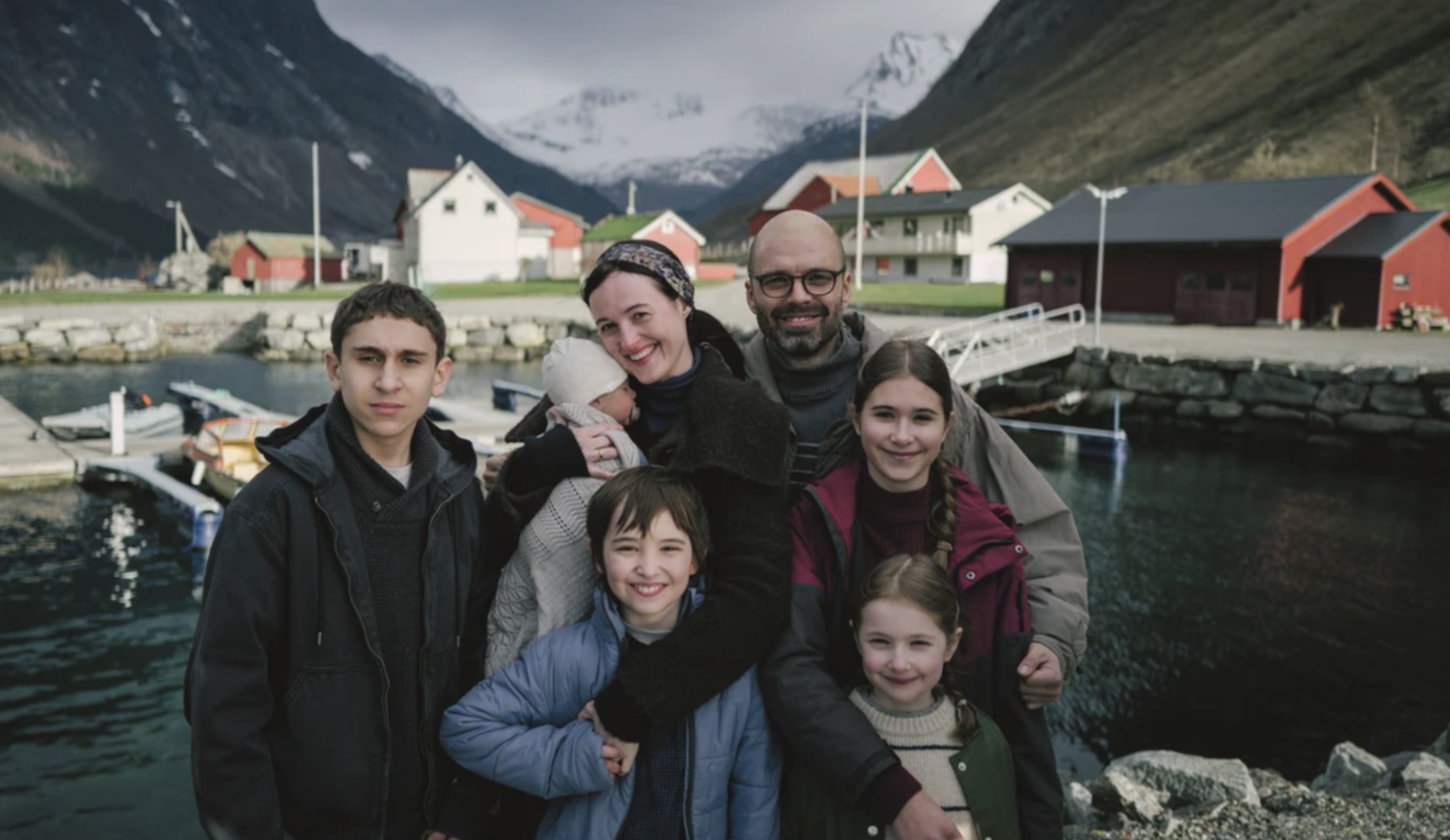
The film’s premise is enough to unsettle: the Gheorghiu family — a deeply religious Romanian-Norwegian couple — settle in a remote village on a Norwegian fjord. When their teenage daughter, Elia, appears at school with bruises on her body, the community begins to ask whether the traditional upbringing her parents impose on their children might have something to do with it. From this starting point, a cascade of uncomfortable questions unfolds.
How far can the state go in governing its citizens’ private lives? Do certain forms of religion dehumanize? How can we ensure that autonomous institutions operate from a logic of compassion and care rather than from purely administrative imperatives?
Led by an outstanding ensemble cast — Sebastian Stan (The Apprentice) as Mihai, the Romanian father and aeronautical engineer, and Renate Reinsve (Sentimental Value) as Lisbet, the Norwegian mother and nurse — the film grounds its philosophical questions in lived, visceral experience. Tudor Vladimir Panduru’s cinematography juxtaposes the austere beauty of the fjords with the regimented rhythms of the community’s daily life, and love erupts like the avalanches that periodically crash down from the surrounding mountains: a reminder that, beyond whatever human borders we construct, a stubborn, luminous hope will keep flickering between people who truly see and recognize one another.
Fjord received the 52nd Ecumenical Jury Prize at the 2026 Cannes Film Festival.