


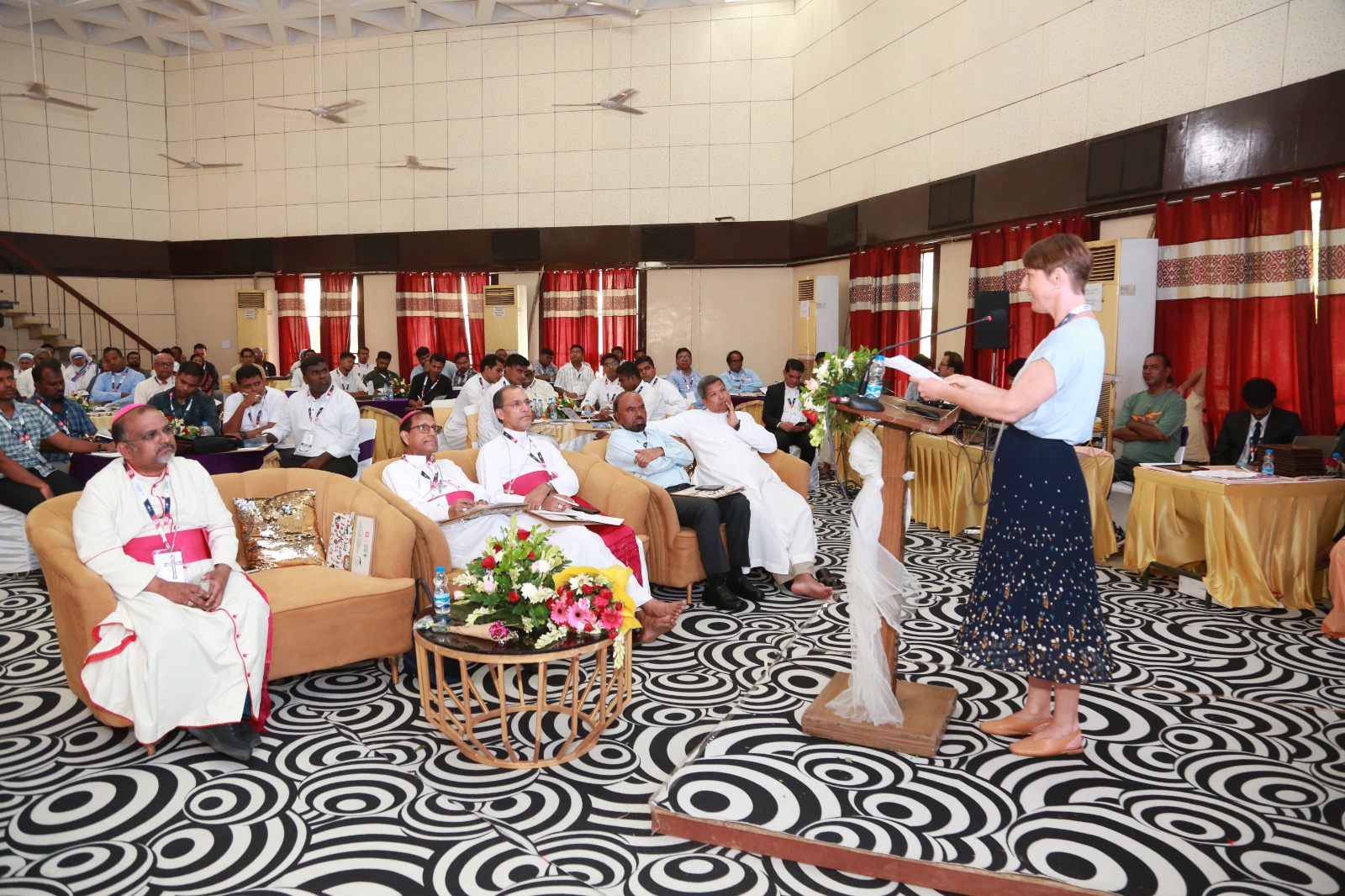
(By Media News). Inspired by the recent encyclical of Holy Father Pope Leo XIV, the international symposium on ‘Magnifica Humanitas organised by CBCI-OSC and NISCORT in New Delhi on the 11th July sought to foster a global dialogue on safeguarding human dignity in the age of artificial intelligence, ensuring that technological innovation remains at the service of humanity and the common good.
Delivering the keynote address, Dr. Natasa Govekar, Director of the Theological-Pastoral Department at the Dicastery for Communication, Vatican, affirmed that every human person is unique and irreplaceable. “No computational system, however sophisticated, can create a human heart,” she said. Laying a strong foundation for reflection on the theme during the symposium, Dr. Govekar urged delegates to integrate technological advancement within a genuinely human-centred and relational vision.
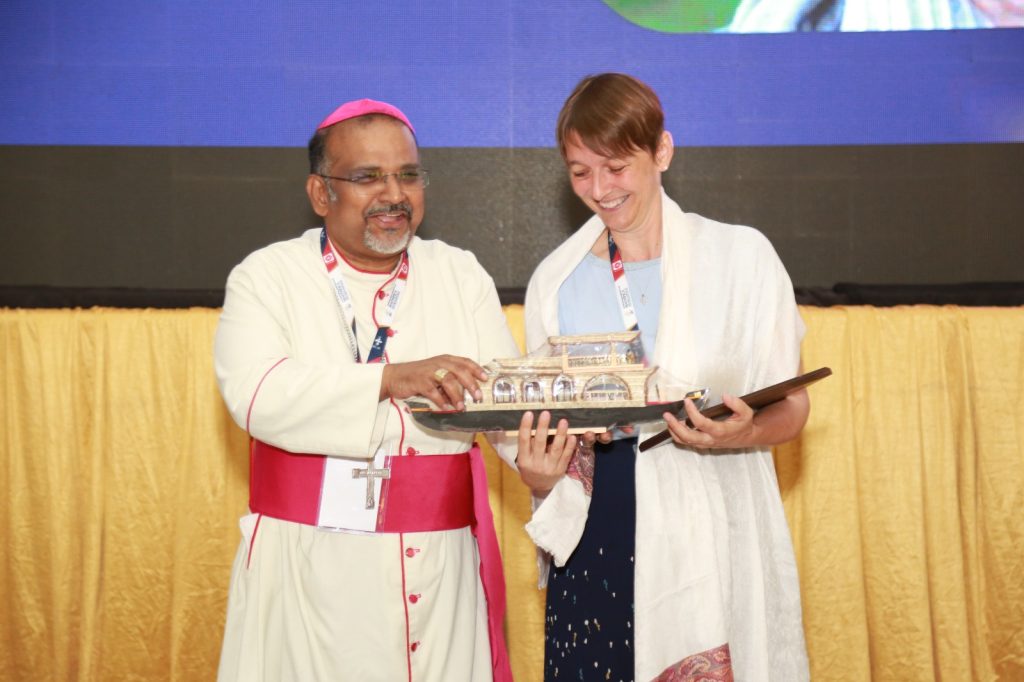
Welcoming the dignitaries and delegates, Dr. Mathew Koyickal, Deputy Secretary General of the CBCI and Director of the CBCI Centre, observed that AI is transforming the way people communicate, educate, and relate to one another. He emphasized the importance of engaging with these rapid technological developments through ethical reflection and responsible action.
In his inaugural address, Most Rev. Dr. Kuriakose Bharanikulangara, Archbishop of Faridabad, stated that the Holy Father’s encyclical focuses on “peace, communion, and the civilization of love and solidarity, while reaffirming the innate dignity of every human person.”
Delivering the presidential address, Bishop Rayarala Vijayakumar, Chairman of the CBCI Office for Social Communication and NISCORT, remarked that humanity is “running a race together,” and stressed that progress must be inclusive, ensuring that no one is left behind. “Reaching together the destination determined by God is what truly matters,” he said.
Representing the Apostolic Nunciature in New Delhi, Fr. Alberto Napolitano, First Secretary, observed that the contemporary world is witnessing an erosion of human and democratic values. He called for a human-centred approach to artificial intelligence, emphasizing that AI must always remain a tool that serves people rather than replacing them.
The symposium was moderated by Dr. Magimai Pragasam, noted media expert and Director of the Centre for Communication and Mind Management. Introducing the theme, he referred to the insights of Asian theologian Prof. Dr. Sherman Kuek, who observed that AI is not a thinking person. It does not know what is true or false. If AI succeeds in replacing human judgment, AI becomes God and eventually a religion of its own. This is a danger posed by the technology. We need the grace of God for our life. Dr. Pragasam noted that the Holy Father’s encyclical highlights both the opportunities and dangers posed by AI, and expressed the hope that the symposium would deepen participants’ understanding and strengthen their commitment to safeguarding human dignity.
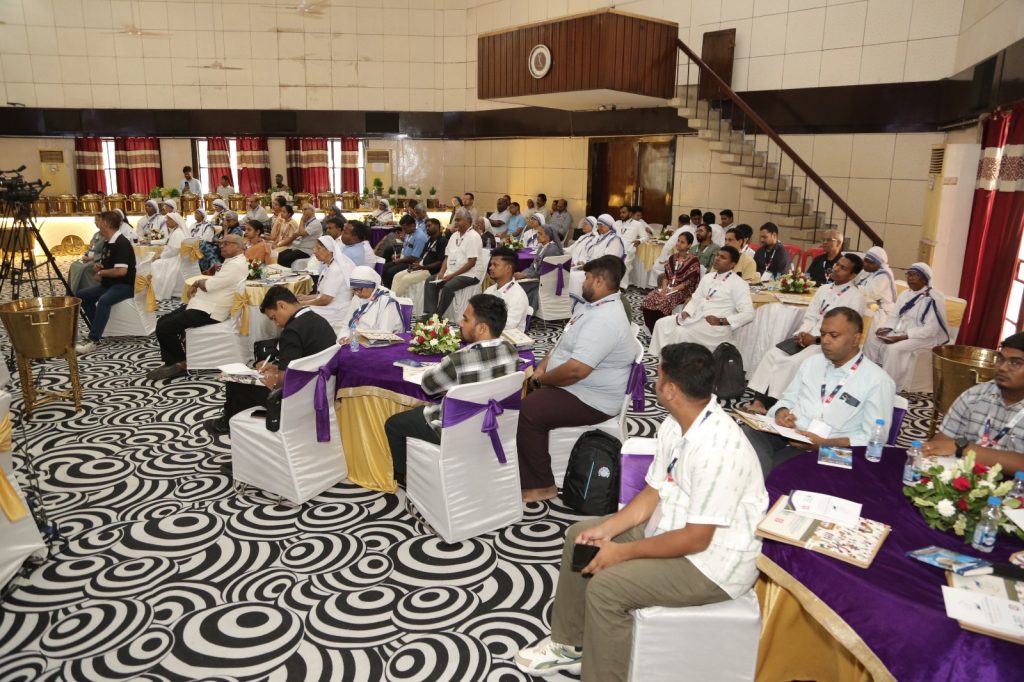
Presenting the ethical perspective, Rt. Rev. Dr. Stephen Fernandes, Auxiliary Bishop of Bombay, emphasized that human dignity is inherent and not earned. He underlined that humanity must promote stewardship rather than domination, adding that moral responsibility can never be delegated to machines.
Speaking from the theological perspective, Prof. Dr. Thomas Vadakkel, Secretary of the KCBC Doctrinal Commission, Kochi, reflected on the profound influence of AI on human reasoning, imagination, and creativity. Raising questions such as, “Can a machine become a person?” and “What does it truly mean to be human?”, he stressed that human dignity is rooted not in intelligence but in humanity’s creation in the image and likeness of God. Contrasting Biblical anthropology with contemporary technological thinking, he proposed that the proper order should always remain God – Human Person – Technology, and never the reverse. He concluded by reminding participants that “freedom entails greater responsibility.”
Sharing the pastoral perspective, Rev. Dr. Babu Joseph, Director of SVD Sadbhavana, observed that AI has become an unavoidable reality, especially for young people who increasingly turn to machines in search of answers to life’s questions. He urged the Church not merely to react to technological changes but to accompany young people through personal presence and pastoral care. He also recommended greater investment in AI education, digital literacy, and meaningful human accompaniment, emphasizing that AI should remain an assistant to humanity and never its substitute.
Presenting the technological perspective, Dr. Vimal Jerald, renowned AI coach and faculty member in the Department of Computer Science at St. Joseph’s College, Tiruchirappalli cautioned that “when people become data, technology loses its values.” He argued that AI should never remain concentrated in the hands of a few, reminding participants that AI is never neutral. Instead, it should always be directed towards the development and flourishing of humanity rather than becoming an instrument of domination.
In his concluding remarks, Dr. Magimai Pragasam summarized the key insights and recommendations that emerged from the symposium, highlighting the need for ethical discernment, theological reflection, pastoral accompaniment, and responsible technological innovation. He thanked the speakers for their valuable contributions to the rich and meaningful deliberations.
On this historical occasion, Dr. Natasa Govekar launched the new logo of the CBCI Office of Social Communication and its resigned website.
The vote of thanks was proposed by Fr. Robinson Rodrigues, Director of NISCORT. He expressed his gratitude to Bishop Rayarala Vijayakumar, Chairman of the CBCI Office for Social Communication; Fr. Biju Alappat, Secretary of CBCI-OSC; the organizing team and staff; all the distinguished Church leaders, speakers and participants; and especially Dr. Natasa Govekar from the Vatican for her inspiring keynote address and significant contribution to the success of the symposium.