


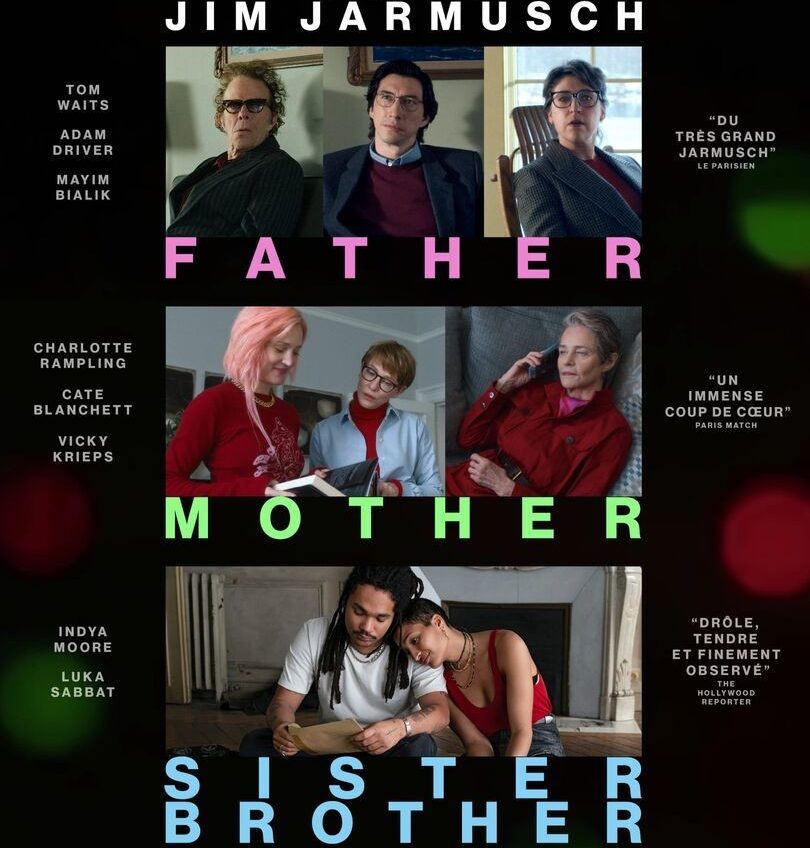
FATHER, MOTHER, SISTER, BROTHER. This comedy-drama film is written and directed by established Director, Jim Jarmusch. It features family relationships by using characters interacting with each other in ways that reflect cultural differences around the world. Rated M (Coarse Language). Language: English/French. 111 min.
Review by Peter W Sheehan, Jesuit Media Australia
The film features an ensemble cast and it won the Golden Lion Award at the 82nd. Venice International Film Festival in 2025. The main drama occurs in the USA, and Dublin. Jim Jarmusch focuses on the closeness of parents with their children, and all the children are grown-up.
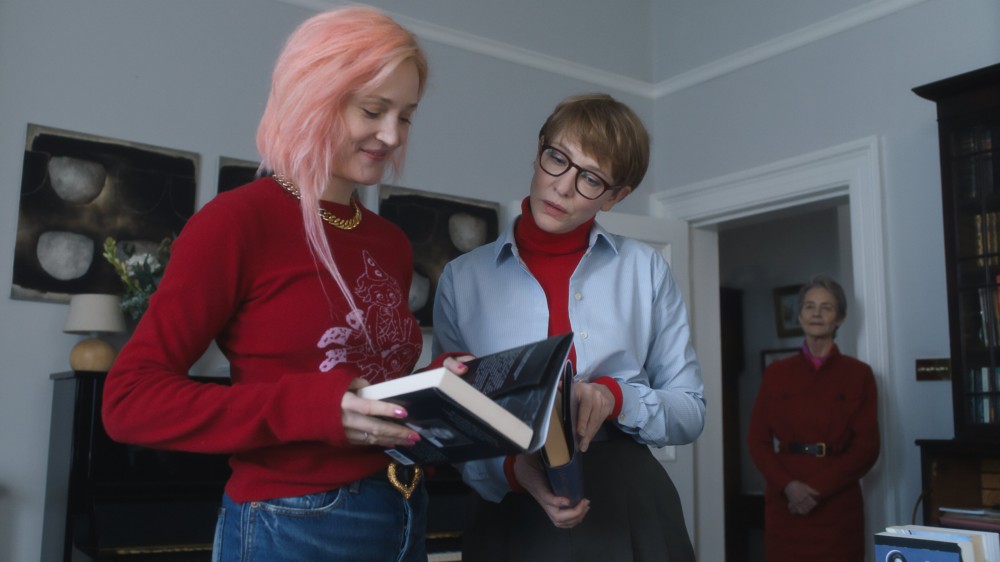
Plots vary for Father, Mother, Sister, and Brother, and they differ to reflect the country in which the characters interact with each other. For instance, Charlotte Rampling, Cate Blanchette, Vicky Krieps, and Sarah Greene act different scenarios in different ways. Principal photography for the film as a whole took place in United States, Ireland, and France.
The film provides an insightful, and at times a comic look at awkwardness in family-life that characterises family interactions.The film concentrates on story-telling in scenarios that are exceptionally well scripted. The chapter on FATHER for siblings Jeff (Adam Driver) and Emily (Mayim Bialiks), for instance, concentrates on two siblings visiting their father (Tom Watts) in New Jersey, USA, where their interactions fail to communicate what they genuinely feel and think. Throughout the film, verbal interactions between characters routinely skirt the edge of what really matters. And the final segment, SISTER-BROTHER, reveals a relationship that gives special meaning to what has gone before.
The film intentionally adopts an anthology mode that Jarmusch incorporates into a triptych structure, and it conveys a picture of complex family life that is revealing in what is being conveyed. Aerial photography is used to highlight the utter ordinariness of what family members are saying to each other. Viewers are made to feel they are watching interactions that occur perfectly naturally, and the film examines family interactions in clever ways. It offers telling accounts of old age, for example, by using images that bounce off each other in ways that signal the value of preserving genuine emotional connection between one member of a family and another.
Jarmusch doesn’t attempt to integrate his scenarios at all. Rather, he leaves it to viewers to think about how everything fits together, and this serves to highlight the subtlety of family interactions, that actually cloak personal disappointment, resignation, and the longing for emotional contact. And Jarmusch impressively sustains real tension by framing family-life in unexpected ways.
Reviewed by Peter Sheehan, an Associate of Jesuit Media