


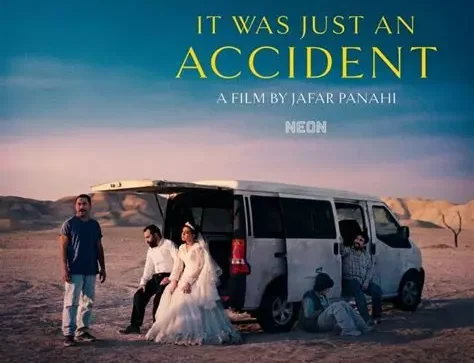
This is a political, morally-framed thriller film set in Iran that explores the reaction of ex-prisoners to someone they think tormented them sadistically in prison. But none of them is absolutely sure.
IT WAS JUST AN ACCIDENT. Starring: Vahid Mobasseri, Mariam Afshari, Ebrahim Azizi, Hadis Pakbaten, Majid Panahi, and others. Directed by Jafar Panahi. Rated M (mature themes and coarse language). 103 min.
Review by Peter W Sheehan, Jesuit Media Australia
This Persian film is a co-production between Iran, France and Luxembourg. The film follows a group of former political prisoners in Iran, who face the dilemma of whether they should exact revenge on the person they think tortured them in prison. The film was selected as the French entry for Best International Feature Film at the 98th. Academy Awards, and it premiered at the 2025 Cannes Film Festival where it took out the Festival’s coveted Palme d’Or Award. The movie is highly critical of the Iranian Government, and the film’s Director, Jafar Panahi, has been imprisoned in Iran multiple times. Panahi made this film without obtaining prior permission from the Iranian authorities, and he filmed the movie without a permit from the Islamic Republic.
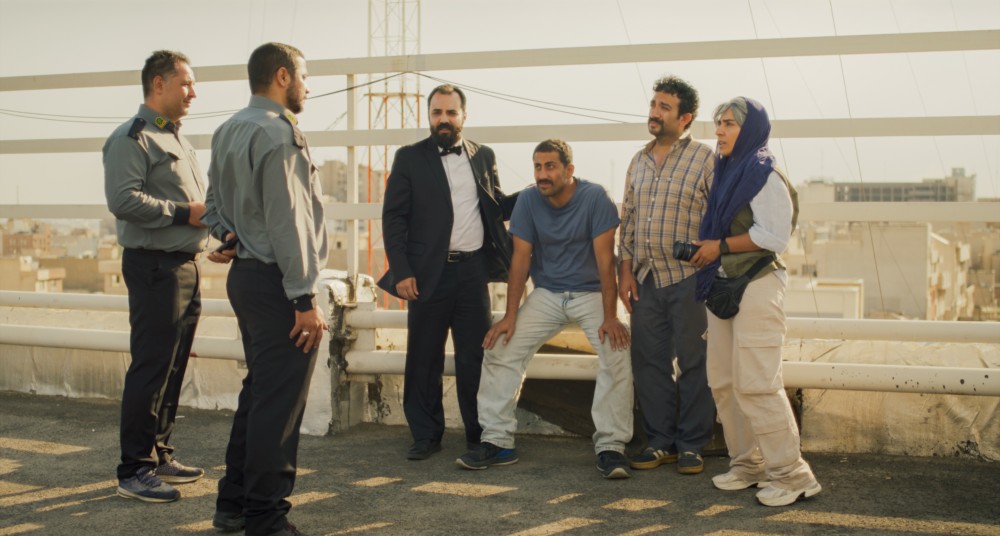
While driving his vehicle one night with his pregnant wife and young child, along a dirt road in Iran, the driver, Eghbal (Ebrahim Azizi), accidentally hits and kills a dog. Eghbal searches for a nearby garage to fix his vehicle. He finds a garage, but its auto-mechanic, Vahid (Vahid Mobasseri), thinks he recognises Eghbal as the person who was his sadistic tormentor in an Iranian prison. Vahid believes Eghbal was the brutal prison officer who tortured him years before, and he decides to take action. Vahid follows Eghbal after Eghbal departs, knocks him unconscious with a shovel, and starts to bury him alive. Eghbal regains consciousness, and begs Vahid not to kill him. Vahid thought he recognised Eghbal’s voice and his stumbling gait, but he is not absolutely sure. He imprisons Eghbal in his van and goes to find other ex-prisoners, who might be able to recognise Eghbal for who he is, and for what he might have done. He knows that they were all abused by the same person. One person says he recognises Eghbal, but the others are not sure. Plans to kill Eghbal don’t eventuate, and the group knows that killing Eghbal would make him a martyr. His captors recognise their situation, and their prisoner is eventually set free. The film concludes without presenting unequivocal evidence that anyone is guilty. However, it finishes with an electrifying denouement which may (or may not) reveal the solution. A simple accident has turned into something deeply emotional and personal for Vahid and the people he knows, and the film deals cleverly and astutely with poignant memories of past events, and the uncertainties of perceived truth.
The movie is embedded firmly within the social and political realities of Iran, and is grippingly anti-authoritarian, and mixes comedy with tragedy in unusual ways – personal differences create social obstacles that are resolved. The film mixes reality with fantasy. It rediscovers the past, explores the present, and re-imagines the future while shifting its tone seamlessly from tragedy to comedy and back again. It is a movie that is gripping, and very well informed by actual stories of people the Director of the movie has known in prison. Under Panahi’s knowing guidance, the film communicates solid warnings about authoritarian control, and deftly explores humans making moral choices, that encompass the search for revenge, as well as finding reasons to forgive.
Reviewed by Peter W. Sheehan, an Associate of Jesuit Media