


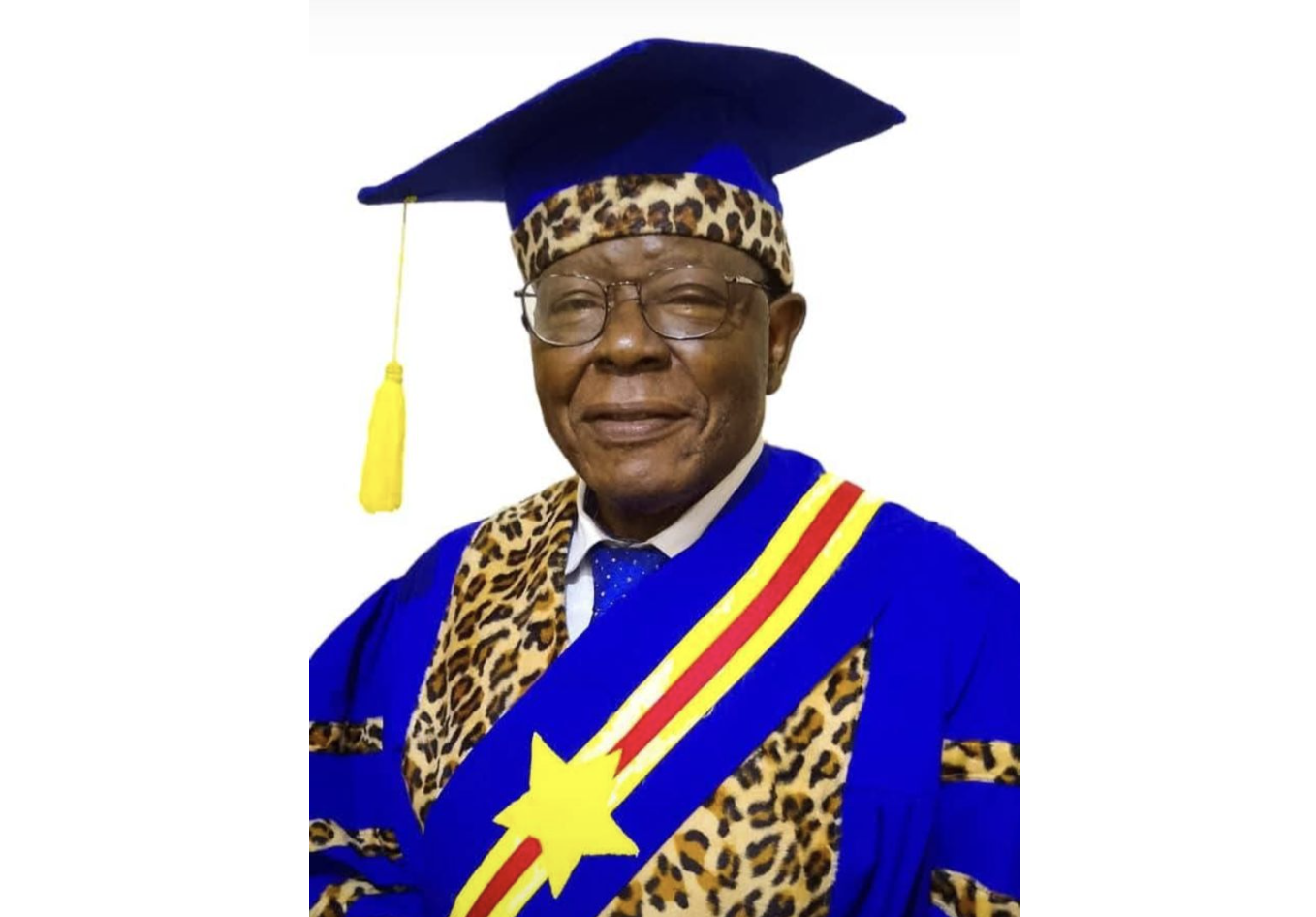
(Charles Ayetan).- Professor Joseph Lino Pungi Ana-U’Mberha died on 17 December in Kinshasa, Democratic Republic of Congo. A renowned teacher, researcher and practitioner in the field of information and communication sciences, he leaves behind a remarkable academic and intellectual legacy, as well as several generations of students trained in scientific rigour and media ethics.
Born on 21 January 1955 in Kikongo, DRC, Lino Pungi devoted his life to university teaching and critical reflection on the media. He was a lecturer in the Department of Information and Communication Sciences at the Faculty of Arts and Humanities at the University of Kinshasa, as well as at the Catholic University of Congo (UCC).
A highly qualified and unanimously appreciated academic, Professor Lino Pungi held several prominent academic and administrative positions. A professor emeritus, he was notably the honorary dean of the Faculty of Social Communications at the Facultés Catholiques de Kinshasa (FCK), now UCC, and then served as Director General of Radiotélévision Catholique Elikya (RTCE) from 2010 to 2012.
According to the rector of UCC, Prof. Abbé Léonard Santedi Kinkupu, Lino Pungi served ‘with dedication, generosity, magnanimity and honourability’.
Lino Pungi held a PhD in Social Sciences, Information and Communication from the Catholic University of Louvain (Belgium), obtained between 1995 and 2001, and also had a solid theological background. He graduated in Theology and Pastoral Communication from the Pontifical Gregorian University in Rome (2001), as well as in Social and Religious Communication from the Centre for Communication Research (CREC-AVEX) in Lyon, France (1987-1988). Earlier, he had obtained a Postgraduate Diploma in Theology and Human Sciences from FCK in 1994, after completing a Bachelor’s degree in the same discipline in 1984.
A prolific researcher, Professor Lino Pungi is the author of numerous scientific publications. His reference work, Éduquer aux médias à l’ère de l’internet : repères théoriques et pistes d’action en RDC/Media Education in the Internet Age: Theoretical Benchmarks and Courses of Action in the DRC, (Collection Médiation, 2013, 231 pages), is a major contribution to media education in Central Africa. This theme was particularly dear to him in the context of his involvement with SIGNIS, the World Catholic Association for Communication, where he chaired the national section in the DRC and the continental branch, Signis Africa, which he led from 2009 to 2014, following his election in Dar-es-Salaam, Tanzania.
Among other scientific articles by this professor emeritus, we can mention ‘Enjeux épistémiques du média télévisuel en RDC’. Pistes pour l’éducation aux médias / Epistemic issues of television media in the DRC. Approaches to media education’ (2004) and, in collaboration with Bob White and Serge Makobo, ‘Les valeurs familiales et la méthode Sabido en République démocratique du Congo : analyse critique d’un développement scénarisé/Family values and the Sabido method in the Democratic Republic of Congo: a critical analysis of scripted development’ (2018).
In an interview with Vatican Radio in 2014, on the sidelines of the Signis World Congress in Rome, dedicated to the theme ‘Media for a culture of peace: creating images with the new generation’, Lino Pungi gave a lucid diagnosis of the challenges facing the Catholic Church in the DRC in terms of social communication, given the competition from Pentecostal radio stations, which are more numerous and better funded. He stressed the need to strengthen the financial autonomy of Catholic media, considering that external aid remained insufficient. According to several observers, this analysis remains even more relevant today.
At the announcement of his death, many voices from the academic and media worlds paid tribute to the memory of a ‘highly respected academic figure,’ recognised for his intellectual commitment, methodological rigour, and high standards of work.